
 Image 1 of 1
Most career advice about disclosure gets this wrong.
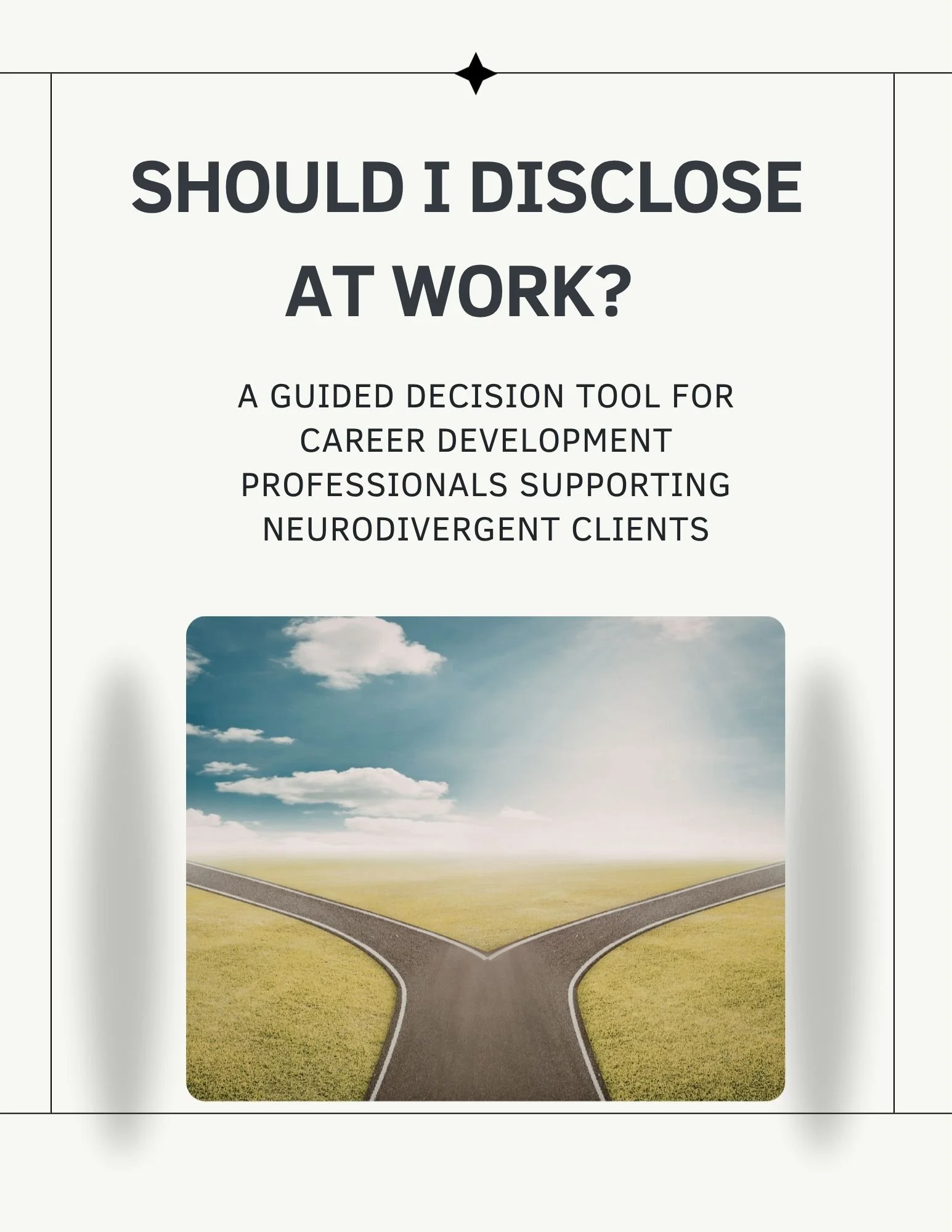
Clients are often told to “just disclose” if they need support—but in reality, disclosure can change how they are perceived, evaluated, and treated at work.
That’s what makes this a high-stakes decision.
This workbook is designed for Career Development Professionals who want to guide that decision properly—without increasing risk or relying on guesswork.
Inside, you’ll get a structured framework to help clients:
assess whether disclosure actually serves them
evaluate workplace safety and risk
separate emotional pressure from strategic decision-making
clarify what they need to succeed at work
plan what to say (if they choose to disclose)
This is not a generic worksheet.
It’s a practical tool you can use in real conversations with clients navigating invisible barriers to employment.
Use it to:
structure 1:1 sessions
guide complex conversations
support clients with clarity and confidence
Most career advice about disclosure gets this wrong.
Clients are often told to “just disclose” if they need support—but in reality, disclosure can change how they are perceived, evaluated, and treated at work.
That’s what makes this a high-stakes decision.
This workbook is designed for Career Development Professionals who want to guide that decision properly—without increasing risk or relying on guesswork.
Inside, you’ll get a structured framework to help clients:
assess whether disclosure actually serves them
evaluate workplace safety and risk
separate emotional pressure from strategic decision-making
clarify what they need to succeed at work
plan what to say (if they choose to disclose)
This is not a generic worksheet.
It’s a practical tool you can use in real conversations with clients navigating invisible barriers to employment.
Use it to:
structure 1:1 sessions
guide complex conversations
support clients with clarity and confidence